



Dr. Kim’s Nailfold Project: Scleroderma Research in British Columbia
A Longitudinal Study on Early Connective Tissue Disease
Tracking Nailfold Capillaroscopy to Detect Early Signs of Scleroderma
Dr. Hyein Kim, MD, MPH, FRCPC
Dr. Kim’s Nailfold Project is a longitudinal research study based in British Columbia that focuses on early signs of connective tissue disease, including scleroderma. By combining symptom tracking, immune markers, and nailfold video capillaroscopy, this study aims to improve early detection and support better outcomes for patients across BC.
A UBC-led study using nailfold capillaroscopy to understand the earliest signs of scleroderma and related connective tissue diseases.
British Columbia is home to innovative scleroderma research, and one of the most promising initiatives is Dr. Kim’s Nailfold Project. This UBC-based study focuses on people in BC who may be developing a connective tissue disease, such as systemic sclerosis (scleroderma), but do not yet meet the full criteria for diagnosis.
By studying symptoms, immune markers, and tiny blood vessels at the base of the fingernails, the research team hopes to uncover early warning signs of disease progression. The goal is simple but powerful: help people at risk get answers sooner and access care earlier.
About Scleroderma Studies in BC
Scleroderma Studies in BC: Why Early Research Matters
Scleroderma (systemic sclerosis) is a complex autoimmune connective tissue disease that can affect the skin, blood vessels, and internal organs. For many people, the path to diagnosis is long and uncertain. Early symptoms such as Raynaud’s phenomenon, joint pain, or unexplained vascular changes may appear years before a formal diagnosis is made.
In British Columbia, clinicians and researchers are working to shorten that journey. Dr. Kim’s Nailfold Project is one of the few research efforts in BC designed specifically to study people at the earliest stages—when they have concerning symptoms or immune markers, but no confirmed diagnosis.
This early-stage research aims to:
- Improve recognition of early systemic sclerosis and related conditions.
- Help doctors distinguish between benign symptoms and those that indicate higher risk.
- Support earlier referrals, testing, and treatment for patients in BC.
Did you know?
Microvascular changes in the nailfold area can appear years before scleroderma is diagnosed, making them a valuable early clue for clinicians.
About Dr. Kim’s Nailfold Project
What Is Dr. Kim’s Nailfold Project?
Dr. Kim’s Nailfold Project is a longitudinal study, meaning participants are followed over time. The research focuses on individuals who:
- Live in British Columbia
- Show early signs of a possible connective tissue disease (such as Raynaud’s phenomenon, immune abnormalities, or unexplained vascular changes)
- Do not yet meet full diagnostic criteria for scleroderma or another defined connective tissue disease
By focusing on this “in-between” stage, the study aims to identify which changes are most closely linked to disease progression and which may remain stable or non-specific.
Key Study Objectives:
- Identify early markers that predict progression to systemic sclerosis or related diseases.
- Understand how vascular changes, immune markers, and symptoms interact over time.
- Support the development of earlier, more accurate diagnostic pathways for patients in BC.
Why Nailfold Capillaroscopy?
Why Nailfold Capillaroscopy Is Central to This Research
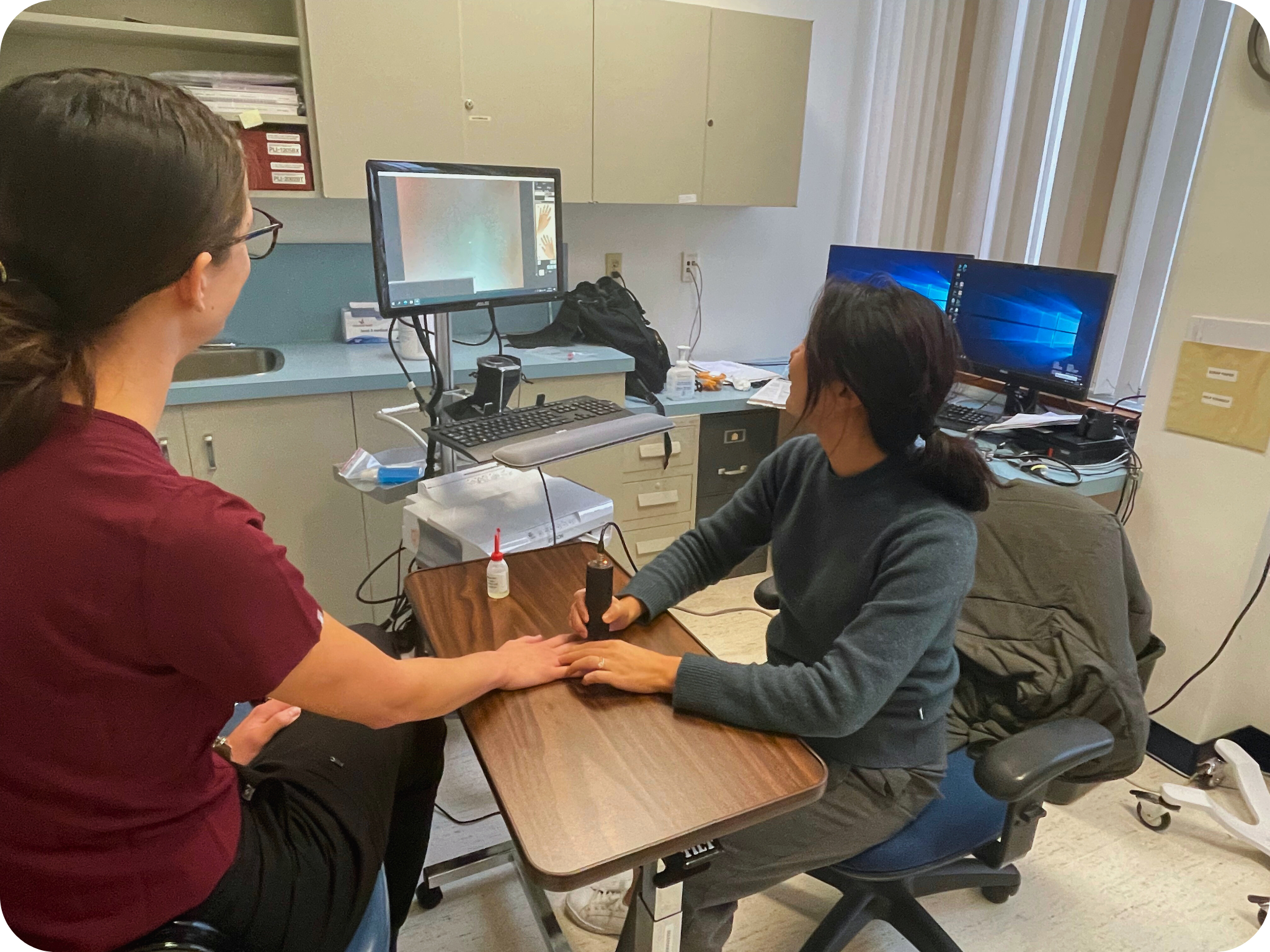
A core tool in Dr. Kim’s study is Nailfold Video Capillaroscopy (NVC), a non-invasive imaging technique that looks at the tiny blood vessels (capillaries) at the base of the fingernails.
These nailfold capillaries can reveal:
- Changes in capillary size and shape
- Reduced capillary density
- Abnormal patterns that are associated with early systemic sclerosis
Because these changes can appear before more obvious clinical signs or organ involvement, nailfold capillaroscopy is an important part of early scleroderma research.
A Painless Window Into Microvascular Health
NVC is quick and painless. A drop of oil is placed on the skin at the base of the fingernail, and a special microscope or video device is used to capture detailed images of the capillaries. Over time, repeat imaging can show whether the vessels remain stable or begin to show patterns associated with disease progression.
What the Study Measures
To understand early connective tissue disease, the research team tracks three main areas over time:
Symptoms
Participants’ symptoms are recorded and monitored to understand how their health changes over time. This may include:
- Raynaud’s attacks
- Skin changes
- Joint or muscle symptoms
- Other relevant clinical features
Immune Markers
The study follows immune system indicators, such as autoantibodies and other blood markers that may appear before a clear diagnosis. This helps identify which immune patterns are linked to progression.
Nailfold Microvascular Health
Using nailfold video capillaroscopy, Dr. Kim’s team evaluates:
- Capillary density
- Capillary shape and structure
- Patterns known to be associated with early systemic sclerosis
Together, these measures may help build a clearer roadmap of how scleroderma and related diseases evolve from the earliest stages.
Current Status and Next Steps
The study is currently awaiting ethics approval through the University of British Columbia (UBC). Once approval is finalized, recruitment of participants in British Columbia will begin.
Planned next steps include:
- Enrolling eligible participants who meet the early-symptom criteria.
- Collecting baseline data on symptoms, immune markers, and nailfold capillaroscopy.
- Following participants over time to track changes and outcomes.
As the study progresses, the findings may help inform new guidelines for early assessment and monitoring of patients at risk for scleroderma and other connective tissue diseases.
Why This Matters for People in BC
For individuals in BC experiencing early symptoms—such as Raynaud’s, unexplained circulation changes, or positive autoimmune tests—uncertainty can be overwhelming. Many people wait years between their first symptoms and a formal diagnosis.
By focusing on the earliest detectable changes, Dr. Kim’s Nailfold Project aims to:
- Shorten the time between first symptoms and appropriate specialist care.
- Help identify which patients are at higher risk of progression.
- Generate BC-based data that can guide clinicians and support advocacy.
Ultimately, this research contributes to a broader vision: earlier detection, better monitoring, and improved outcomes for people at risk of scleroderma in British Columbia.
“Understanding what happens before scleroderma is diagnosed is key to improving the lives of patients. Dr. Kim’s Nailfold Project is helping shine a light on that early stage.”
Supporting Scleroderma Research in BC
How You Can Support Scleroderma Research in BC
Community support plays a vital role in advancing scleroderma research. You can help by:
- Raising awareness about early signs of scleroderma and related conditions.
- Sharing reliable information with friends, family, and healthcare providers.
- Supporting fundraising efforts that help sustain research initiatives in BC.
Every donation, conversation, and shared resource brings us closer to earlier diagnosis and better care for people affected by scleroderma.
Donate to support scleroderma research in BC (link to donation page)
Additional Research Resources
Stay Informed About Scleroderma Studies in BC
Scleroderma Association of B.C. Research Program
The SABC Research Program brings together patients, clinicians, and researchers to learn more about how scleroderma affects the skin and lungs. By helping identify early signs of disease and the factors that drive progression, this work supports better care and new possibilities for future treatments.
Patient Participation in Research
Explore current clinical trials available to people living with scleroderma. This page shares details about trial opportunities — including eligibility, how to join, and the potential benefits — so that patients in B.C. can consider participating in research toward better treatments.
Our Financial Support to Research
The SABC Research Grant program funds scientists and institutions studying scleroderma and related conditions in B.C. and Canada. Each year, eligible researchers can apply for grants to explore causes, biomarkers, treatments, and patient-centered outcomes — supporting efforts to improve diagnosis, care, and eventual cures.
Scleroderma Patient-centered Intervention Network (SPIN)
SPIN is an international collaboration of people living with scleroderma, clinicians, and researchers, working together to design and test programs that help improve daily quality of life. Their work includes developing and evaluating accessible, evidence-based tools for managing symptoms, emotions, hand mobility, and overall well-being.
Research Grant Applications
This page explains how individuals and the community can support scleroderma research through donations, advocacy, or volunteer efforts. By contributing to research funding and awareness in British Columbia, supporters help accelerate studies into better diagnostics, treatments, and improved patient care.
Canadian Scleroderma Research Group
The CSRG is Canada’s national research network studying systemic sclerosis (scleroderma), collecting long-term data and clinical information from hundreds of patients across the country. With over a decade of follow-up and more than 1,700 participants, the group helps improve understanding of how scleroderma develops and evolves — paving the way for better diagnosis, care, and therapies for people living with the disease.